
OLD WEAVES NEW RULES
OLD WEAVES NEW RULES
Namrata Kedar meets the new wave of designers inspiring a sari renaissance by experimenting with the traditional garment in their own personal wardrobes
Our grandmothers and mothers embraced the sari with quiet uniformity—wrapped, pleated and draped with practised precision. The younger generation of women in India, however, is peeling back tradition and ceremony to reveal and revel in the unstitched garment’s open-ended nature, endless possibilities and quiet ease. They’re reclaiming the sari, not as tradition dictates; instead reimagining it for themselves, be it for festivities or just another Tuesday evening. We spoke to five next-gen designers doing just that, not only with their creations, but also in how they interpret it in their personal lives. The sari, in their hands, is no longer an archaic garment weighed down by tradition and nostalgia. It’s dynamic, versatile and alive.
Palak Shah
FOUNDER & DESIGNER,
EKAYA BANARAS
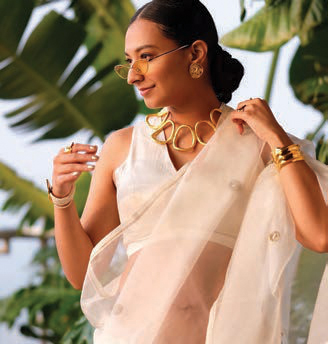
Saris are the domain of mothers for most. But for Palak Shah, her affinity for the drape comes from her father, a sari manufacturer. “As a child, I would go into his office and play around with the fabrics, wrapping them around myself,” says the founder of handloom textile brand Ekaya Banaras. Now, she can drape a sari in two minutes flat. Without a mirror, if need be. “Try me,” she laughs. Shah’s brand is focussed on keeping traditional weaves alive for present generations. And now, she’s doing the same through her Instagram too. Her page is replete with inspiration to style the sari in fun, modern ways—the pallu draped around her neck, contrasted with a chic leather jacket, layered with a Burberry trench coat or Alaïa belt, paired with a kimono jacket, or with a halter blouse and sheer gloves. Shah suggests that these daring combinations, though curated, are arrived at intuitively. “I am just expressing myself. The drape depends on how a particular sari feels on my body.” For effortless ease, she believes the sari must be in sync with who you are. “It’s a piece of fabric, have fun with it. There are no rules.”
Suhani Parekh
FOUNDER & CREATIVE
DIRECTOR, MISHO
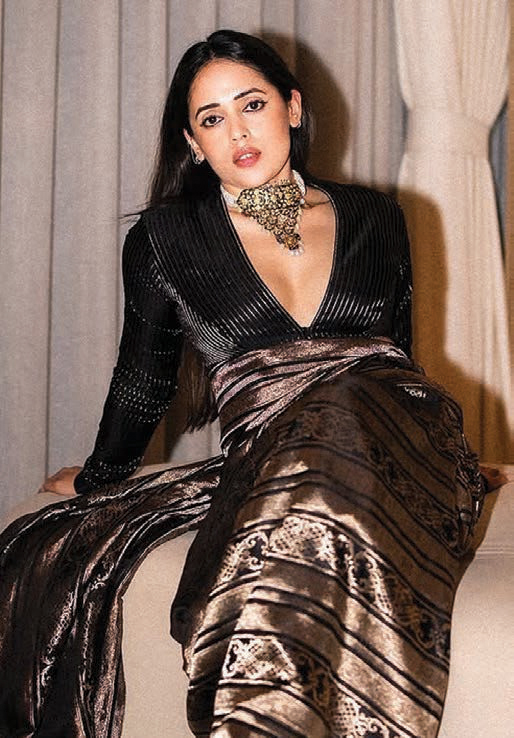
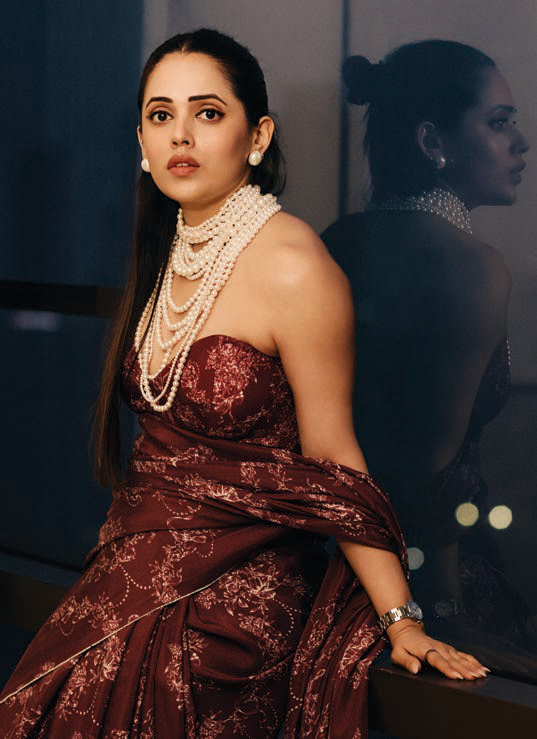
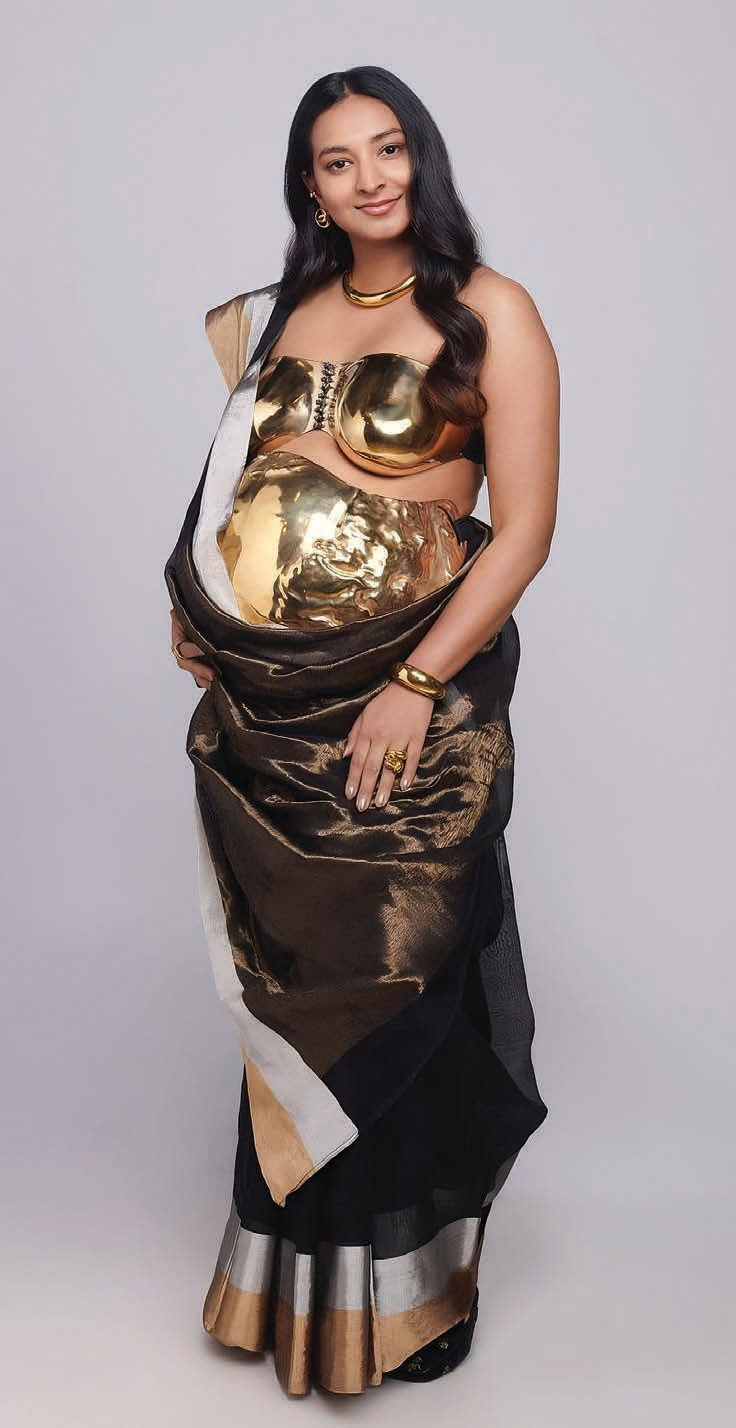
In recent years, jewellery brand Misho’s sculptural body pieces and breastplates have emerged as a celebrity favourite as far as modern sari blouses go. It is also the brand’s founder, Suhani Parekh’s preferred way to style her own saris. “I like reinterpreting tradition in a way that feels true to my style,” she says. “It brings an unexpected edge while letting the sari take centre stage.” The sari is ubiquitous in Parekh’s sartorial lexicon, and one of her standout sari moments was at a gala event in 2023. “I was in my third trimester and I’d styled a vintage bronze silk sari with a 24K gold plated breastplate and belly plate. The sari, the shine, the bump—it all came together in a bold and unexpected way.” Parekh continues to create contrasts that still feel cohesive. Recently, at her high jewellery collection launch in Jaipur, she styled the sari with a blazer and belted it for a sharp and modern look.
Divya Saini
FOUNDER, BODEMENTS
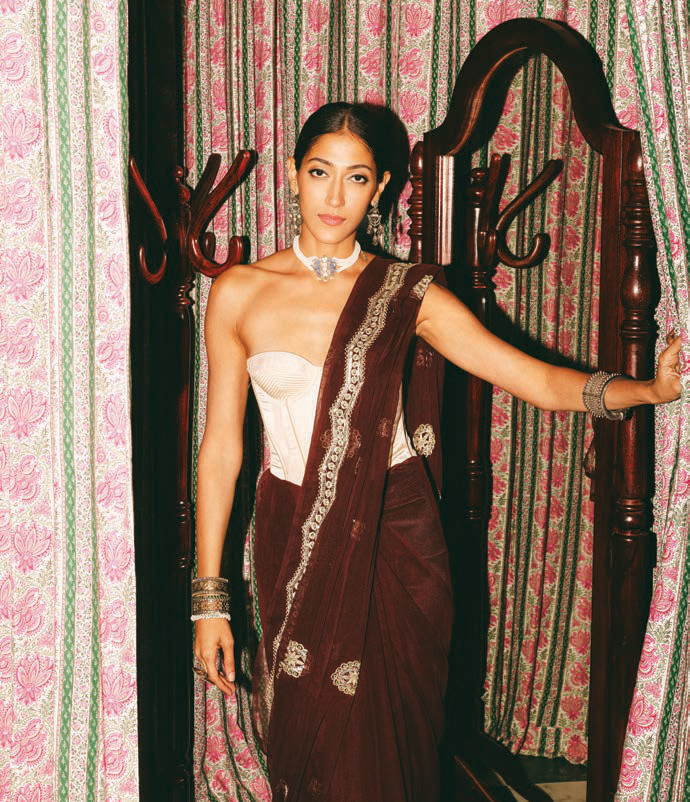
Divya Saini may carry the sari with effortless elegance now but she wasn’t always this deft. I remember the fabric slipping from my fingers, the pleats being a mystery, and the pallu trailing too long,” she recalls. The sari became magical once she stopped trying to drape it the ‘right way’ and instead went with what felt right. Now, you’ll find her wearing it in unexpected ways—with an oversized men’s shirt, styled with combat boots, or layered over a trench coat. “It isn’t so much a rebellion as it is a conversation between the old and the new,” she says. “Accessories also play a big role. I pair it with chunky jewellery, vintage eyewear or silk scarves worn as belts.” Saini’s go-to styling hack though is to wear the sari with structured corsets from her label, Bodements, which repurposes old saris to create contemporary silhouettes. “Reinventing the sari was my way of preserving its essence while making it accessible to a new generation,” she adds. “I don’t want people to fear the sari. I want them to play with it.”
Angelique Raina
FOUNDER & DESIGNER, ACQUIRE
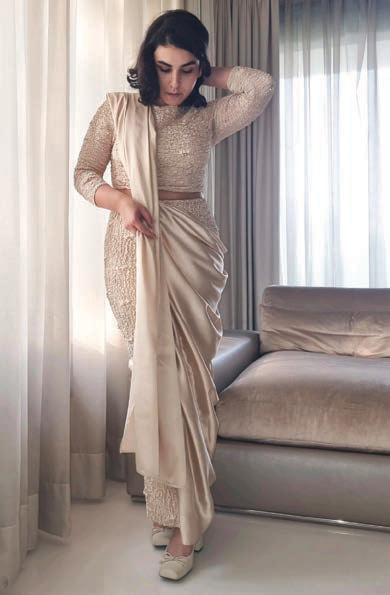
For Indo-French designer Angelique Raina, the sari is the epitome of Indian elegance. “I discovered India through the sari,” she says. However, Raina felt it had limitations and wanted to make it more modular with her clothing label, Acquire. So she reimagined the sari as a smocked skirt with an attached half-drape pallu. “Simplification was at the core of it,” she says. “It’s easy to slip in and out of, and the pallu ensures a beautiful fall.” An ode to her French heritage, Raina often “mimics the very French way of wearing the scarf around the neck with the pallu.” And as a quarter Maharashtrian, she leans towards the drape from that region. “My natural preference is for the pallu to drape from the back and fall in front.” She took this idea for a spin last Diwali: “I wore the smocked sari with a bralette, draped the pallu the Maharashtrian way, and styled it with pearl jewellery,” she says. “It was a nod to my heritage.”
Arpita Mehta
FASHION DESIGNER
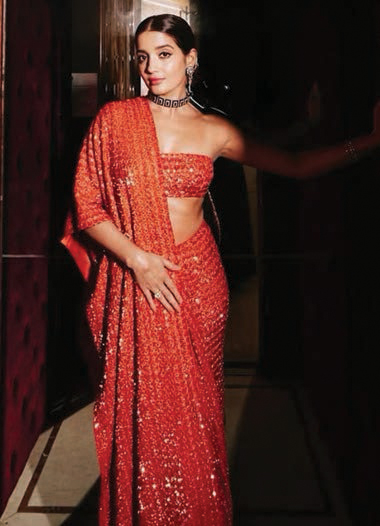
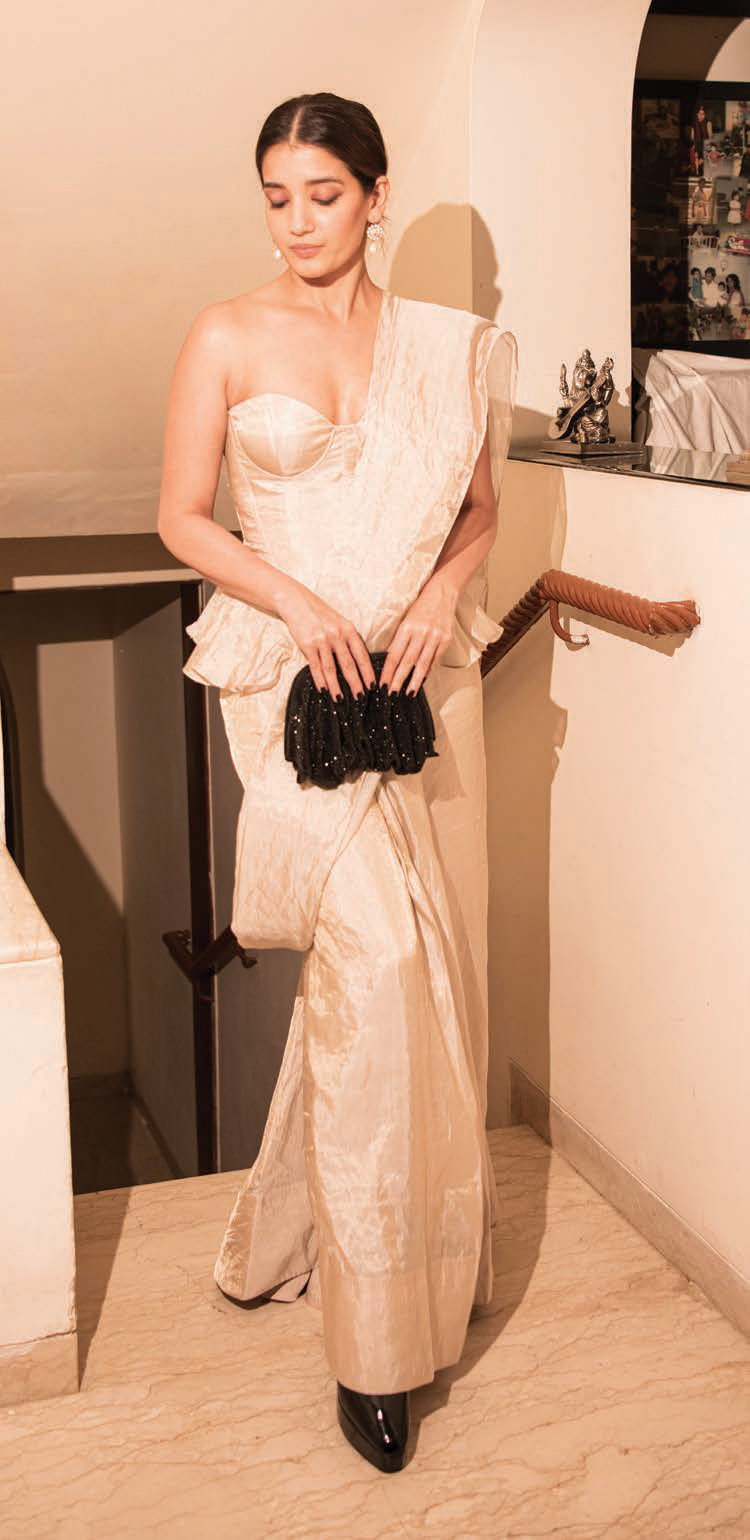
The ruffle sari, a trademark of the designer’s eponymous label, is an extension of her personal style—fluid, feminine and romantic with a hint of tradition. It was born from her effort to reinvent saris to fit her lifestyle. “It’s about functionality,” Arpita Mehta says. “Today, many of us lack the patience and the skillset to drape a sari. So, wearing a pre-stitched one and experimenting with the blouse are my ways of simplifying it.” Mehta usually goes for intricately embroidered traditional cholis or strapless mirror work bustiers when styling her own saris. Recently, for Vivienne Westwood’s fashion show in India, she styled a silk tissue sari with a sexy corset—marrying fluidity with structure. “The resulting fall created such a beautiful silhouette.” While the sari is a timeless icon, to Mehta, it’s also about keeping it current.